Avincis report warns Europe ‘dangerously unprepared’ for aerial firefighting
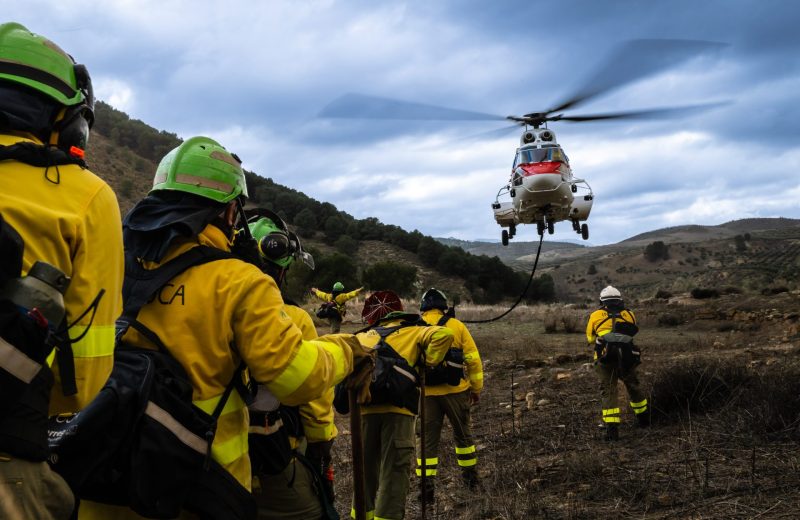
Training day: an Airbus AS332L2 Super Puma on a training mission. (Photocredit: Avincis).
Europe is “dangerously unprepared” to fight intensifying wildfires on the continent using airborne assets, warns a report commissioned by leading emergency services provider Avincis.
The report concludes the EU should speed up procurement and ease bureaucracy in pilot licensing and technical certification and that Europe’s aerial fleet is growing too old and capacity to build new aircraft remains hamstrung. It also claims government investment is insufficient, leaving Europe underprepared for longer and more intense wildfire seasons.
Last year saw record-breaking fires flare across Europe with more than 1.03 million hectares burn across the continent. More than 80% of the damage was concentrated in just five countries.
‘Invest in new aircraft’
“Wildfire seasons are getting longer, global aircraft availability is shrinking, and the traditional model of moving aircraft around the world is no longer reliable,” said John Boag, group CEO of Avincis. “If Europe wants to remain prepared, it must invest now in new aircraft, remove regulatory barriers and build a year-round aerial firefighting capability before the situation deteriorates further.”
The company he leads is a major provider of aerial firefighting services in Europe plus emergency medical services and a range of other missions. Avincis operates a fleet of about 220 aircraft including 180 helicopters and 40 fixed-wing aircraft. Rotary assets deployed on firefighting missions include: the Super Puma L2 and Bell 412. Helicopter such as the EC145-C2 fly helicopter emergency medical missions.
Avincis also deploys proprietary unmanned aerial vehicles (UAVs) to complement its rotary wing aircraft. Missions include: water-dropping, ground firefighter transportation, mission coordination and real-time images for control centres.
Operating in the high-risk areas of Spain, Italy, Portugal and Chile, Avincis delivered more than 4,000 missions last year to protect vulnerable communities and mitigate the impact of fire on the environment.
While the report welcomed the European Parliament’s €600m commitment in 2024 to procure 22 fixed-wing DHC-515 amphibious firefighting aircraft with deliveries staggered between 2027 and 2030, far more investment was needed to plan a proportionate response to the growing fire threat.
This aircraft gap is becoming critical as wildfire seasons grow longer and more intense. “Demand for aerial firefighting capacity is already increasing faster than Europe’s ability to supply it, particularly during peak summer months,” said the report. It calls for bulk procurement frameworks that would enable manufacturers to open second production lines and accelerate delivery timelines.
‘Natural successor to Kamov’
The availability of firefighting aircraft was restricted when Kamov helicopters across the region were stood down as a result of sanctions put in place following Russia’s entry into Ukraine. “Historically these aircraft, which can carry bambi buckets with up to five tonnes of water, were a critical part of the European firefighting fleet,” wrote Boag in the report’s Forward. “The Blackhawk, although not currently certified to operate in Europe or able to carry passengers, would be the natural successor to the Kamov in terms of water drop capability.”
Also, rising defence budgets across Europe are drawing experienced aviation talent towards military careers, and a generation of seasoned firefighting pilots is approaching retirement without enough aircrew entering the profession to replace them. Closing the workforce gap will take at least 10 years and building the training pipeline should begin immediately, according to the report.
Picking up the theme of recruitment, John McDermott, the owner and former chief pilot of McDermott Aviation said: “While we’ve got to develop new aircraft, we’ve also got to work out means of getting more people into the industry, and of helping maintain aircraft for longevity.”
The industry needs “not only good, robust aircraft, but robust crews to operate these aircraft”, he added. But Europe remains structurally under-equipped.
Drawing on the views of academics, business leaders and professional firefighters, the report was published this week at the Aerial Fire Fighting Series: Global Conference and Exhibition in Rome. Read the full report, Up in flames: The challenges of fighting wildfires from the air in a hotter Europe, here.