HI Uplift: ‘New growth’ for global heli market: Investec
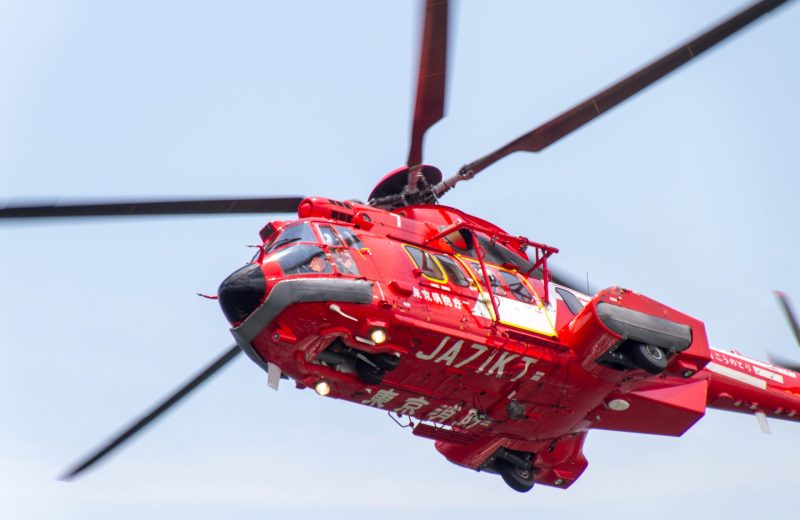
Investec predicts "a new growth phase" for the helicopter market. (Photocredit: Shutterstock).
“A new growth phase” has begun for the global pre-owned helicopter market, according to Investec, the banking and wealth management group. In a recent report, prefaced “From turbulence to trajectory”, the bank explains how renewed momentum is returning to the market, fuelled by stable progress after a decade of volatility following the oil price crisis of 2015–2016.
“The rebound is underpinned by strong fundamentals: rising order books, increased financing activity and a tightening market for pre-owned inventory – especially in light and super-medium categories,” said John Shaw, Aviation Finance at Investec. In support, Shaw referenced the Fortune Business Insights report predicting growth in the helicopter services market from $31.16bn last year to $48.06bn by 2032.
He summed up current market dynamics like this: “While total pre-owned supply is growing, the market for high-spec, sector-specific aircraft remains tight. Well-maintained helicopters entering the market are being absorbed quickly, with demand consistently outpacing supply.”
New helicopter deliveries are slowly entering service. But lingering supply chain disruptions have pushed operators towards the pre-owned market which is proving resilient. Twin-engine helicopters, particularly light twins used in emergency medical services (EMS), have seen sharp increases in market value – a signal of strong operational demand amid constrained new aircraft availability, said Shaw.
“Demand is strongest in mission-critical sectors such as EMS, search and rescue, and firefighting, where aircraft turnover remains essential and publicly funded contracts lend stability,” he added. “As competition in these sectors increases, it’s influencing lease rates and driving operators to secure versatile, modern aircrafts given the ongoing need for high-quality aircrafts in mission-critical operations globally.”
Offshore energy
Offshore energy operations – both traditional and renewable – are also guiding fleet decisions. “Medium, super-medium and heavy helicopters remain the backbone of offshore transport given their capability for long-range transportation and higher passenger loads,” said Shaw. “However, shifting political dynamics, especially in the US, have introduced uncertainty into long-term renewable energy transition projects.”
Europe, in contrast, is maintaining investment momentum. This is reaffirming the central role helicopters play in renewable offshore infrastructure, he said.
While Europe and North America remain dominant forces in the pre-owned helicopter market, the Middle East has shown its appetite for new helicopters with large multi-year orders to replace and supplement existing fleets. Despite early concerns that these fleet upgrades might flood the pre-owned market, staggered deliveries and continuing regional demand have offset those fears, Shaw said.
In Africa and Asia, Investec says fleet expansion and opportunity are being driven by geography and industrial demands. In Africa, helicopters support mining, conservation and security efforts, while Asia is investing in aerial mobility for transportation and public services.
The shift towards multi-role helicopter, able to adapt to different operational needs is another defining trend of the rotary market this year. For evidence, Shaw highlights the rise of the super-mediums. “Now a decade old, this category is enjoying a surge in orders,” he says. “Operators are favouring this class for its flexibility, combining payload and range capacities with lower operational costs – making it ideal for varying mission requirements.”
Access to finance
Turning to access to finance, this remains a pivotal factor in sustaining the flow of sales and building market momentum, according to the bank. The helicopter market can be disproportionately impacted by a relatively small number of helicopters simultaneously entering or exiting the market. “While major leasing players have consolidated, new capital is flowing in from banks, private debt funds and alternative financiers,” said Shaw. “Operating leases, export credit and structured finance deals are all supporting the uptick in transactions.”
As the market matures, securing the right financing package has become as critical as aircraft selection itself. Tailored capital structures are helping both operators and lessors maintain balance in an otherwise cyclical market.
Lessons learnt from the past will encourage industry players to closely monitor market dynamics, according to the report. “With operators increasingly focused on modern, flexible fleets and mission-specific value, the pre-owned helicopter market is hopefully not just regaining altitude – it’s setting a new flight path for sustained growth,” concluded Shaw.
Do you agree with Investec? Are the prospects set fair for sustained growth in the civil helicopter industry? Share your views by emailing Mike Stones. Meanwhile, we scanned our recent headlines for evidence of a revival in helicopter fortunes. Here’s what we found.
Reasons to be cheerful: from HI headlines
Chris Bradshaw, president, CEO, Bristow (August 2025)
“This confidence [in lifting the company’s 2025/2026 Outlook] is supported by the stability of our Government Services business, the heavy weighting of our Offshore Energy Services business to more stable production support activities and the breadth and diversity of the geographic markets we serve.”
Michael York, CEO, GD Helicopter Finance (July 2025)
“If you haven’t been asleep for the past four months, you’ll have noticed the world has changed and that change has been tumultuous. Those who remember the bad days, will know they were bad for a long time. Now, the industry is in good shape. “We’ve seen flying hours up, fleets are fully utilised and OEM orders are rising – but in a very calm way. We are seeing operators and OEMs making money, MROs [maintenance, repair and overhaul businesses] making money and it’s hard to get order book slots (and helicopter parts). We’ve seen most of the industry making money and even seen end users ordering aircraft.”
Lars-Henrik Thorngreen, CEO, NHV (July 2025)
“Over the past couple of years, we’ve seen an increase in the average length of the oil and gas commitments contracts that we sign – up to seven years now with the possibility of extension. Longer contracts are a very good movement from an operator perspective, which makes it easier for us to manoeuvre the market and also attract financing. Financing in oil and gas has been a bit difficult, because most of the financiers have been diversifying out of the oil and gas and looking at the greener energy.
Philippe Lubrano, CEO, Rotortrade (July 2025)
“The helicopter financing environment has improved noticeably. Access to funding at better dollar rates is back. We’ve seen financing costs drop by a couple of points, which makes helicopter acquisitions significantly more competitive – especially for well-prepared buyers. What we anticipated is already happening. Defence budgets are increasing globally. New helicopter orders from governments are flooding the system, which naturally reduces availability for civilian operators. In many cases, civil buyers now face lead times of two or three years for new aircraft. What the market increasingly needs: ready-to-fly inventory.”
Pat Sheedy, CEO, Milestone Aviation (June 2025)
“Stability [in the helicopter sector] is a good word. The volatility we saw over the past decade – with orders all over the place and the exuberance that all of us were involved in – really crashed down on the sector. We don’t need that type of exuberance again. So, we’ll take stability for the moment.”
Jennifer Martone, senior executive, Sikorsky (June 20225)
“We’ve seen [offshore helicopter] contract life extend. And we’re seeing an emerging market for those aircraft [Sikorsky S-92] that are 20-plus years, that still have plenty of hours left on them.”
Helicopter Investor News
- Rotortrade: Africa heli market ‘small but poised for growth’
- Gibraltar launches rotary and fixed wing aircraft registry
- Archer Midnight makes longest flight so far
- Investec: Pre-owned heli market rebounding
- HI Uplift: Joby’s Blade acquisition ‘speeds commercialisation’
- HI Uplift: Bristow upbeat on offshore earnings as outlook lifted’
HI Uplift Dashboard: Helicopters for sale
Multi engine
- Total for sale/lease: 268 – two fewer than last week
- Percentage for sale/lease: 3.58%
- Absorption rate: 3.99 months
- Total fleet: 7,553 – three more than last week.
Single engine
- Total for sale/lease: 418 – seven fewer than last week
- Percentage for sale/lease: 3.6%
- Absorption rate: 3.51 months
- Total fleet: 11,618 – six more than last week.
Source: AMSTAT, August 22th, 2025.