HI Uplift: Twin trends power Antin purchase of HP Helicopters
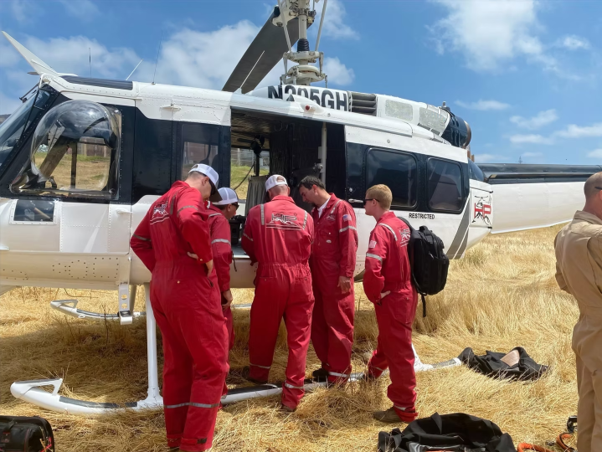
Antin's new acquisition, HP Helicopters operates a fleet including the Bell Medium Series 205/UH-1H, the UH-60 Blackhawk, the Agusta 119 and the Bell 430.
Most investors, when they buy a firm, load it with debt from day one. French private equity firm Antin Infrastructure is taking the opposite view after its acquisition of US-based heavy-lift operator HP Helicopters (HPH).
Antin bought a majority stake in HPH, an operator serving utilities and wildfire agencies across the US and Mexico plus other missions, earlier this month. Antin paid with equity only. “Given the high-growth nature of the company, Antin has acquired the company on an unlevered basis and expects to add leverage as the HPH fleet increases,” Stephan Feilhauer, partner, Antin tells us.
Financing for the deal came from Antin’s NextGen fund, which the firm describes as “a €1.2bn vehicle that invests between €50m and €200m per transaction”. Growth spending in fleet expansion, entering new geographic markets or upgrading operational assets, “is within this range”, adds Feilhauer. Antin has not disclosed the specific price of acquiring HPH.
The logic behind the acquisition – notwithstanding the operator’s relatively modest price tag – reflects market demand, says Feilhauer. “Two uncorrelated macro trends, namely AI-driven [electric] grid modernisation and mitigating the impacts of a changing climate lay behind the acquisition,” he says.
‘Heavy lift helicopters’
AI-driven demand for more power has led to a step change in utility capex plans to upgrade US grid infrastructure. Much of that grid infrastructure is remote. “There is a significant rise in the demand for heavy lift helicopters that can transport heavy equipment to these projects,” he says.
Moreover, intensifying wildfire seasons are driving an urgent, unprecedented need for rescue and firefighting helicopters to protect vulnerable communities.
“The number of acres burnt, and the cost of fire suppression has significantly increased over recent decades. Climate change has made wildfires more frequent, larger and closer to population centres,” Feilhauer tells us.
Supply has been slow to catch up. “The helicopter market has not been able to meet the underlying demand growth,” he says. “There are not enough new pilots to replace an aging workforce.” The industry also remains highly fragmented and dominated by sub-scale operators, which creates an opportunity for companies like HPH.
‘They couldn’t meet the demand’
Chris Teets, co-founder, Red Mountain Capital Advisors, which advised the sellers, said they saw the same imbalance on the other side of the acquisition. HPH’s founders Brady and Tracy Bauder were turning away business. “They were hitting all this demand for work that they couldn’t meet,” Teets tells us. “They wanted to significantly grow the fleet. And, in order to do that, they needed a capital partner.”
Antin’s plans include increasing the fleet size to counter this imbalance. “We expect to add a significant number of helicopters to the fleet and expect EBITDA to grow in line, if not faster, than the size of the helicopter fleet,” the firm said.
While Antin sees growth opportunity, it also wants to see proof of a steady cash flow. HPH’s contract book tells a convincing story on the top as well as bottom line, it believes.
HPH’s revenue model is three pronged: spot contracts, fulfilled on an ad hoc basis, minimum-use contracts, usually lasting six to 36 months and guaranteeing a minimum number of hours flown per day; and finally exclusive-use contracts. These guarantee a minimum daily revenue, irrespective of flight hours, and tend to last five years.
Most of HPH’s current revenue is supplied by spot contracts and exclusive agreements. But Antin’s plan is to pivot revenue toward minimum use and exclusive contracts. “This means taking on long-term contracts that provide revenue visibility,” says Feilhauer.
“These provide the business with guaranteed revenue from customers with inflation add-ons providing not only inflation linkage but cash flow visibility as well.” Long-term visibility into revenue is what lenders usually look at when pricing assets. As the revenue mix skews towards long-term contracts, this can help with borrowing. And the unlevered start at the time of acquisition leaves room to fund expansion through debt.
Jack Doss, part of Teet’s team who advised HPH, says reputable assets like HPH are hard to find and adds that barriers to entry for newer entrants were central to how the company was priced. “Each certificate takes years to get,” he says. “If you miss a bidding window you have got to wait five, 10 years to try to bid again,” he says. That was why HPH was able to get a premium price point with a premium buyer such as Antin, he adds.
Doss and Teets say they sold the plan and not just the company to Antin. “We had a very specific plan in terms of how the fleet was going to grow, what the cost of that fleet was going to be, what the timing of that was,” Teets tells us. “We were able to get a better valuation because there was that path to capital deployment and returns.”
Antin has already mapped an exit. “We believe a significantly larger HPH would be an attractive acquisition candidate for other infrastructure funds, PE funds with industrials focus and/or some of the large aviation businesses,” Feilhauer says.
Taking stock, the plan has a clear sequence. Buy clean. Add aircraft. Shift revenue mix to guaranteed revenue. Finally, sell a much bigger, better financed business. Let’s see if it all adds up.
Helicopter Investor News
GDAT names Joseph Kearton as CEO, GDAT Global
Leonardo opens new flight sim facility in Italy
DRF Luftrettung joins forces with DRF Maintenance
Helaba & BayernLB close €125m deal for GDHF
Antin Infrastructure acquires HP Helicopters
HI Uplift: Pre-owned heli sales, Aero Asset report
HI Uplift: Lobo Leasing sells stake and new ACH boss
HI Uplift Dashboard: Helicopters for sale
Multi engines
- Total for sale/lease: 226 – four fewer than last week
- Percentage for sale/lease: 2.18%
- Absorption rate: 3.57 months
- Total fleet: 10,349 – six fewer than last week.
Single engine
- Total for sale/lease: 422 – four more than last week
- Percentage for sale/lease: 3.08%
- Absorption rate: 4.23 months
- Total fleet: 13,687 – two more than last week.
Source: AMSTAT, October 9th, 2026